You might notice your vehicle vibrates at idle. This often points to engine misfire or worn engine mounts. Many drivers—about 78% of mid-market vehicle owners—report this vibration as a sign of trouble. Quick checks help you spot the cause early and keep your car running smoothly.
Key Takeaways
- Check spark plugs regularly. Worn plugs can cause engine misfires and vibrations at idle.
- Inspect engine mounts for damage. Loose or broken mounts can lead to noticeable shaking.
- Monitor your vehicle’s fuel system. Clean or replace injectors to prevent rough idling and vibrations.
Why is My Vehicle Vibrates at Idle?
When your vehicle vibrates at idle, you might feel shaking in the steering wheel or seat. This problem often starts with loose engine mounts. These mounts hold your engine in place and absorb vibrations. If they wear out or break, the engine’s movement transfers directly to the car’s frame. At idle, the engine hits a resonant frequency, making the shaking more noticeable. As you press the gas pedal, the vibration often fades because the engine speed changes.
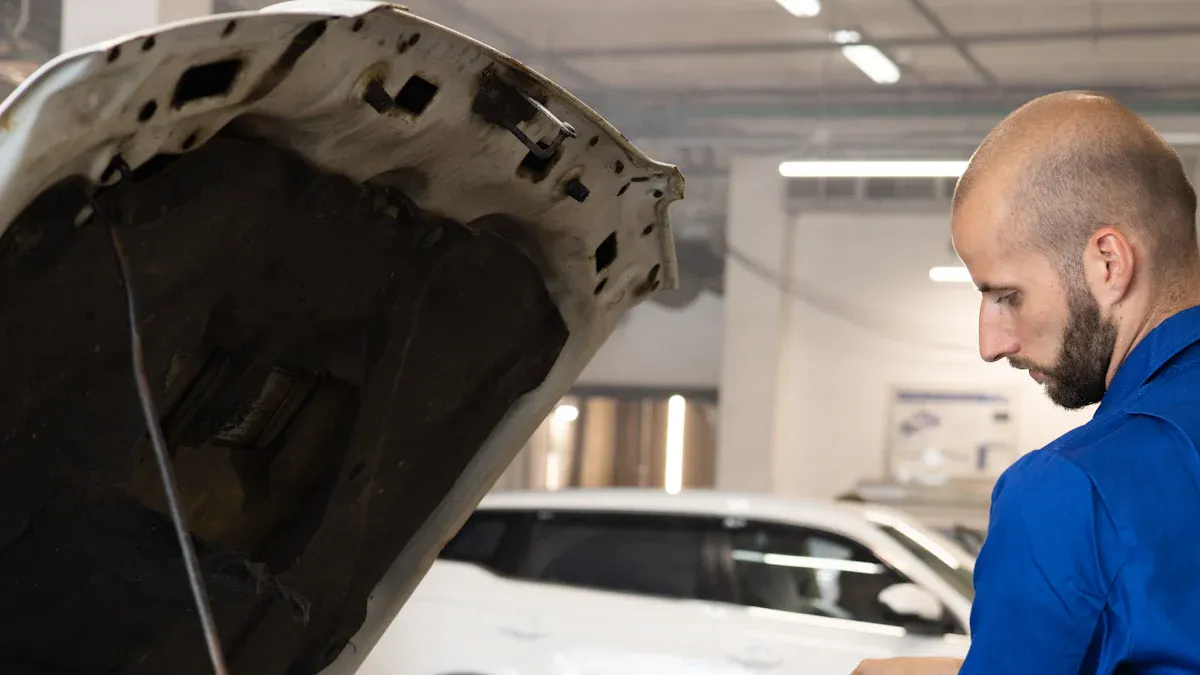
You can spot signs of loose engine mounts by looking for these clues:
- Your vehicle vibrates at idle, especially when stopped.
- The steering wheel or seat shakes more than usual.
- You see the engine move more than normal when you open the hood and the car is running.
If you notice these symptoms, check the mounts for cracks or damage. Sometimes, one or more mounts fail to isolate engine movement from the chassis. When this happens, the vehicle vibrates at idle and the ride feels rough.
Other mechanical issues can also cause your vehicle vibrates at idle. Here is a table showing common reasons:
| Cause | Explanation |
|---|---|
| Engine Misfire at Idle | One or more cylinders do not fire correctly, causing shaking and rough idle. |
| Vacuum Leak | Too much air enters the engine, leading to rough idling or stalling. |
| Idle Air Control Valve Issues | A faulty valve can cause rough idling or stalling. |
| Fuel System Problems | Uneven fuel flow leads to rough idling and hesitation. |
| Sensor Failures | Bad sensors disrupt engine performance and cause rough idling. |
If your vehicle vibrates at idle and you cannot find the cause, you should seek help from a mechanic. Quick action prevents further damage and keeps your car safe.
8 Quick Checks Car Vibrates at Idle
Spark Plugs and Ignition Issues
You should check your spark plugs first when you notice your car vibrating at idle. Worn or fouled spark plugs often create weak sparks. This leads to misfires and causes the engine to shake. You may see the RPM needle jump or feel the whole car shake.
Worn or fouled spark plugs create weak or inconsistent sparks that fail to ignite the compressed air-fuel charge uniformly. Misfires follow, leading to engine vibration and uneven idle.
Common symptoms include rough idling, engine misfiring, and difficulty starting the car. Replacing spark plugs every 30,000 to 50,000 miles helps prevent these problems and keeps engine performance smooth.
Vacuum Leaks and Idle Vibration
Vacuum leaks let extra air into the engine. This disrupts the air-fuel mixture and causes idle vibration. You might notice the engine RPMs rise or the car sputters.
- Fuel trims monitoring with a scanner can help you find leaks.
- Spraying carburetor cleaner on hoses and listening for idle changes also helps with diagnosis.
Air Intake and Filter Problems
A dirty or clogged air filter limits airflow to the engine. This causes an improper air-fuel mixture and leads to vibration. The engine may shake more than usual at idle, especially at low throttle. Even a small blockage can cause rough engine operation and affect car performance.
Fuel System and Car Vibrating at Idle
Problems with the fuel system, like clogged injectors or a failing fuel pump, can cause car vibrating at idle. The engine may not get enough fuel, leading to rough idling and vibration. You might see the RPM needle move or feel the engine shake. Regular maintenance helps prevent these issues and supports good engine performance.
Exhaust and Driveshaft Issues
A damaged or leaking exhaust system can disrupt engine balance. This leads to vibration at idle. Cracked exhaust manifolds or faulty oxygen sensors can change the air-fuel mixture and cause rough engine operation.
- Check universal joints, bearings, and rubber mounts for wear or damage to diagnose car vibration.

Engine Compression and Idle Problems
Low engine compression can cause vibration and poor performance. Use a compression gauge or pressure sensor for diagnosis. If you find uneven compression, you may need a mechanic to fix deeper engine issues.
Belts, Pulleys, and Idle Vibration
Worn or misaligned belts and pulleys often cause vibration. Improper tension can make the problem worse, especially when you use the A/C.
- Inspect belts for cracks or glazing.
- Check pulley alignment and tension to prevent further problems.
Regular checks and quick diagnosis keep your car running smoothly and reduce idle vibration.
What to Do Next
When to See a Mechanic
You may try several quick checks at home, but sometimes car shaking at idle signals a deeper problem. If you notice car shaking that comes from the engine or transmission, you should visit a trusted mechanic right away. Early intervention can prevent more expensive repairs.
You should also seek professional help if:
- Car shaking continues after you replace spark plugs or check for vacuum leaks.
- The source of the car shaking is hard to find or diagnose.
- You feel car shaking that gets worse over time or affects your ability to drive safely.
A rough idle can be difficult to diagnose. Mechanics have the right tools and experience to find the cause of car shaking and fix it before it leads to bigger issues.
Ignoring persistent car shaking can lead to serious risks:
| Type of Risk | Description |
|---|---|
| Safety Implications | Vibrations can compromise your vehicle’s stability and handling, increasing the risk of accidents. |
| Long-term Damage | Minor vibrations often signal the development of mechanical issues that can escalate into severe problems. |
| Cost Implications | Early intervention typically reduces repair costs compared to addressing severe mechanical failures later. |
Preventing Future Idle Vibration
You can reduce the chance of car shaking at idle by following a few simple maintenance steps:
- Check and replace spark plugs regularly to prevent car shaking from misfires.
- Inspect and change air filters every 12,000 to 15,000 miles to keep the engine running smoothly and avoid car shaking.
- Examine motor mounts for wear. Replace them if you notice car shaking or see visible damage.
- Monitor the fuel system. Clean or replace dirty fuel injectors to stop car shaking before it starts.
- Check for exhaust system leaks. Fix any leaks to prevent car shaking and keep your vehicle safe.
Regular care keeps your vehicle running smoothly and helps you avoid car shaking at idle in the future.
You should address car vibration at idle quickly. This keeps your vehicle safe and reliable. Regular checks offer these benefits:
- Reduced repair costs
- Improved safety
- Longer vehicle lifespan
Unresolved vibration can cause engine misfires, higher emissions, and passenger discomfort, as shown below:
| Impact on Vehicle Safety and Performance | Description |
|---|---|
| Engine Misfires | Can lead to loss of power and control while driving. |
| Reduced Fuel Economy | Increases operational costs and can affect driving range. |
| Higher Emissions | Contributes to environmental pollution and may lead to legal issues. |
| Premature Wear on Engine Components | Increases the likelihood of breakdowns and costly repairs. |
| Passenger Discomfort | Affects the overall driving experience and can distract the driver. |
| Indication of Deeper Mechanical Problems | May escalate into more serious issues if not addressed promptly. |
Use these 8 quick checks to keep your car running smoothly. If vibration continues, see a professional for help.
FAQ
Why does my car shake only at idle?
You often feel shaking at idle because the engine runs at low speed. Problems like misfires, vacuum leaks, or worn mounts cause vibration at idle.
Can dirty fuel injectors cause vibration at idle?
Yes, dirty fuel injectors can disrupt fuel delivery. This leads to rough running at idle. You may notice the engine shakes more at idle than when driving.
How often should I check for issues if my car vibrates at idle?
You should check for problems at idle every few months. Regular checks help you catch issues early. This keeps your car smooth at idle and prevents bigger repairs.